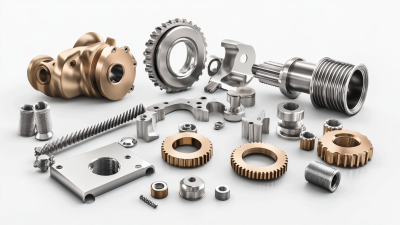
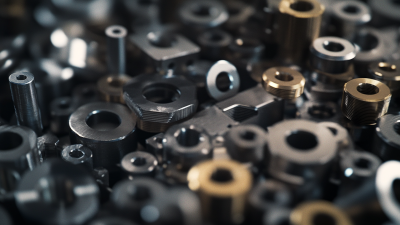
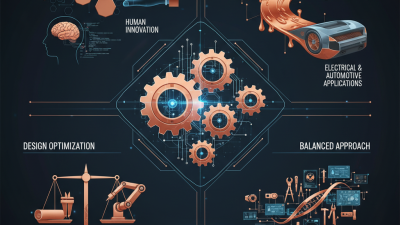
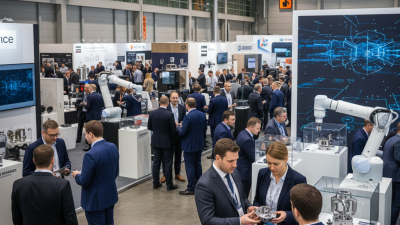
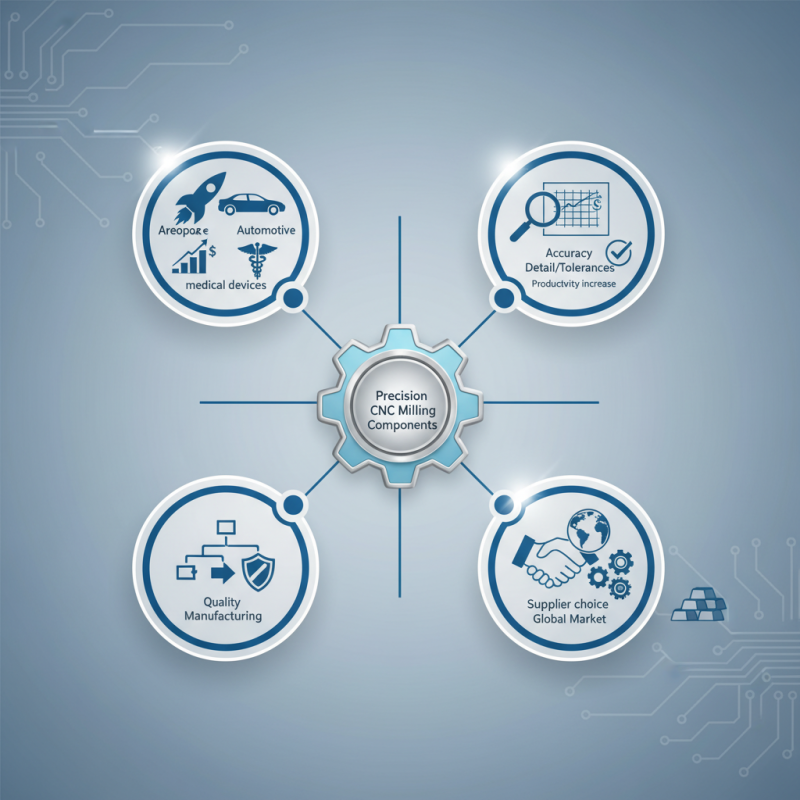
You know, these days, there's been a crazy surge in demand for Precision Cnc Milling Components. It’s pretty wild — according to a MarketsandMarkets report, the CNC machining industry is expected to hit a whopping $100 billion by 2025. That really says a lot about how much companies are leaning on precision engineering, especially in industries like Aerospace, automotive, and medical devices. If a company’s all about putting out top-notch quality, they’re definitely gonna stay more competitive on the global stage.
These precision CNC milling parts are crucial when it comes to nailing accuracy in complex projects. They can handle super detailed work and tight tolerances that traditional methods just can't match. I read in a McKinsey study that businesses using the latest CNC tech can see productivity jump by as much as 30%. But, let's be honest, not everyone’s there yet — some are still stuck with old-school techniques, which can lead to inefficiencies and higher costs.
Picking the right supplier? It’s a big deal. Knowing the industry standards, the best materials, and what their machining capabilities are can totally make or break your project. Companies really need to think about who they’re partnering with and make sure everyone’s on the same innovative page. At the end of the day, Precision CNC Milling Components aren’t just a tool — they’re pretty much a straight shot to achieving excellence in your manufacturing game.
Importance of Precision in CNC Milling: A Statistical Overview
Precision in CNC milling is crucial for a variety of industries. Statistically, components manufactured with high precision see a reduction in assembly errors by up to 33%. This not only streamlines production but also enhances product reliability. Accurate dimensions are essential, particularly in sectors like aerospace and automotive, where even minor discrepancies can have significant consequences.
According to recent industry reports, 85% of manufacturers stated that precision Cnc Milling Services directly impact their quality control measures. Components fabricated within tight tolerances minimize potential failures in operations. Furthermore, the demand for precise components continues to grow, as seen in the projected CAGR of 6.9% for CNC machining services in upcoming years.
Despite advances in technology, challenges remain. Issues such as tool wear and machine calibration errors can lead to imperfections. Continuous monitoring and inspections are necessary to maintain precision standards. This highlights the importance of reliable CNC milling services that integrate both advanced technology and human expertise. Balancing these elements ensures that projects meet the rigorous demands of modern manufacturing.
Evolution of CNC Milling Technology: From Traditional to Precision Machining
CNC milling technology has significantly evolved over time. Initially, traditional milling relied heavily on manual processes. Operators had to depend on their skills and judgment to create precise components. This method often resulted in inconsistencies and errors, particularly with complex designs.
The shift to precision machining marked a turning point. Computer Numerical Control (CNC) systems introduced automation, enhancing the accuracy of milling processes. Today, CNC machines operate with remarkable precision, reducing human error. They are capable of executing intricate designs that were previously unattainable.
Yet, this evolution is not without its challenges. Dependence on technology can sometimes lead to oversights in quality control. Operators must remain vigilant and knowledgeable to complement machine capabilities. Continuous training is essential to maintain a workforce that can adapt to these advanced tools. Balancing technology with skilled craftsmanship remains crucial in achieving optimal results.
Key Advantages of Using Precision CNC Milling Components in Manufacturing
When it comes to manufacturing, precision matters. CNC milling components stand out for their accuracy. These components are designed using advanced technology to ensure tight tolerances. Manufacturers can produce parts that fit perfectly, reducing the need for further adjustments. This precision is crucial for industries like aerospace and automotive, where safety and reliability are paramount.
Using CNC milling also enhances production efficiency. The automation involved speeds up the process while maintaining high quality. Unlike traditional methods, CNC milling allows for complex shapes and designs with ease. This capability opens up new possibilities for designers and engineers. However, it’s important to acknowledge that the setup costs can be high. Investing in CNC milling technology requires careful consideration.
还有一点需要考虑的是,使用CNC铣削技术需要熟练的操作人员。 技术人员必须具备知识和经验,以确保最佳结果。 尽管有时会面临挑战,结果通常是值得的。细致的工作可以显著提高最终产品的质量。 高质量的CNC铣削组件让制造业受益匪浅。
Comparison of Tolerance Levels: Standard vs. Precision CNC Components
When it comes to Cnc Machined Milling Parts, precision is crucial. Standard components often have broader tolerances, which can lead to issues in fit and functionality. For example, a standard tolerance might allow for a variation of 0.1 mm, while precision components can achieve tolerances as tight as 0.01 mm. This difference is vital for industries requiring high accuracy, such as aerospace and medical devices.
Understanding the tolerance levels can help in project planning. Choosing precision CNC milling components provides tighter control over dimensions. This control directly impacts the performance of the final product. It’s common to overlook these details when in a rush, but the implications can be significant. Consider the costs of rework or replacements later on.
Tips: Always specify your tolerance requirements clearly when placing an order. Double-check your designs before submission to prevent errors. Even small inaccuracies in design can lead to larger problems during manufacturing. Investing time upfront can save money and headaches later.
Comparison of Tolerance Levels: Standard vs. Precision CNC Components
| Component Type | Typical Tolerance Level | Application Suitability | Cost Range |
| Standard CNC Components | ±0.1 mm | General applications, non-critical parts | $5 - $20 per piece |
| Precision CNC Components | ±0.01 mm | High precision industries, aerospace, medical | $50 - $200 per piece |
| Ultra-Precision Components | ±0.001 mm | Research, nanotechnology, specialized machinery | $200 - $500 per piece |
Industry Applications of Precision CNC Milling: Case Studies and Examples
Precision CNC milling is critical across various industries, from aerospace to medical manufacturing. These components enhance efficiency and accuracy, which is vital for complex projects. For instance, the aerospace industry uses precision CNC milling to create lightweight parts. According to a recent report, about 70% of aircraft components now depend on CNC technology. This trend showcases its importance for modern engineering.
In automotive applications, precision CNC milled components ensure reliability. A case study highlighted how a leading manufacturer improved production efficiency by 30%. This advancement stemmed from utilizing CNC milling for making engine parts. Each part's precision reduced waste and accelerated assembly times. Such applications underline the process's role in improving overall production quality.
Tips: Always consider the material used for CNC milling. Different materials can significantly impact the component's performance. Select a reliable partner who understands your specific needs. They can guide you in choosing the right techniques for optimal results. Reflecting on past projects can help you identify areas for improvement. Embrace mistakes as learning opportunities to enhance future projects.
Why Choose Precision CNC Milling Components for Your Projects?
Cost-Effectiveness of Precision CNC Milling Components in Long-Term Projects
Precision CNC milling components offer significant cost-effectiveness for long-term projects. High-quality parts result in fewer defects and less waste. This can substantially reduce production costs over time. Investing in precision machining often saves money in the long run, despite potentially higher initial costs.
Durability is another key factor. Precision CNC components tend to last longer, reducing the frequency of replacements. For instance, in industries where machinery operates continuously, reliable parts minimize downtime. This downtime can be costly, affecting productivity and profit margins.
However, not every project can justify the initial investment. Some projects may not warrant high precision, and opting for lower-cost alternatives might seem attractive. It’s essential to weigh the required precision against the project's budget and timeline. Even projects initially planned with budget constraints can benefit from revisiting material choices and machining options. This reflection can lead to better outcomes in quality and overall project success.
Future Trends in Precision CNC Milling: Innovations and Predictions
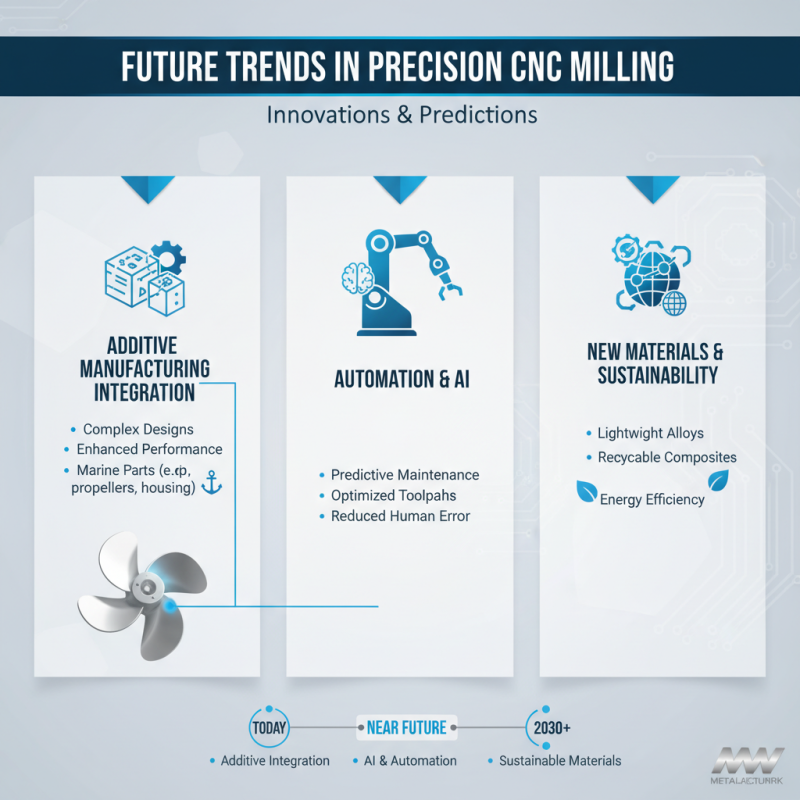
The landscape of precision CNC milling is evolving rapidly. Innovations are shaping the future of components used in various industries, including aerospace and automotive. One of the most promising developments is additive manufacturing integration. This process allows for complex designs that traditional milling cannot achieve. CNC milling marine parts are benefiting from this, offering enhanced performance and durability.
As technology improves, automation will play a larger role. Machines will become smarter and more precise. This means reduced waste and shorter production times. Companies can expect precision that meets stringent industry standards. However, navigating these advancements can be challenging. Staying updated on the latest technologies is essential for ongoing success. Here are some tips to consider:
1. Always evaluate new software tools. They can enhance precision and efficiency.
2. Regularly train your staff on new techniques and tools. Knowledge is a key driver of quality.
3. Engage with industry experts. They provide insights that can guide your project decisions.
The future trends in precision CNC milling indicate a push towards customization and sustainability. As customers demand more tailored solutions, manufacturers must adapt. Yet, striking the right balance between innovation and cost-effectiveness is crucial. Flexibility will become more critical in this dynamic environment. Companies should prepare for continuous change and improvement.
Effective Solutions for Precision CNC Milling Parts in Construction and Heavy Equipment Industries
In the construction and heavy equipment industries, precision CNC milling parts play a crucial role in ensuring the efficient operation of machinery. These components are integral to high-performance applications such as bulldozers, excavators, cranes, and loaders, where the demand for reliability and durability is paramount. According to industry reports, the global CNC machining market is projected to reach $100 billion by 2025, indicating a growing reliance on advanced manufacturing techniques to meet the rigorous standards necessary for modern construction equipment.
The manufacturing of CNC milling parts requires advanced technology and skilled craftsmanship to produce high-strength and high-precision components. The stringent requirements in the industry necessitate a focus on material quality and machining accuracy. For example, studies indicate that components manufactured with tolerances as tight as ±0.005 mm are vital for effective machinery function and safety. This level of precision not only enhances performance but also extends the lifecycle of the machinery, minimizing downtime and maintenance costs.
Furthermore, the adaptation of new materials and machining techniques is pushing the boundaries of what can be achieved in terms of part performance. High-end CNC machining capabilities enable the production of lightweight yet robust components, which are essential for improving fuel efficiency and operational effectiveness in construction projects. As the industry evolves, the emphasis on precision and quality in CNC milled parts remains a cornerstone for the success and advancement of heavy equipment applications.
FAQS
: Precision CNC milling offers high accuracy. It meets tight tolerances, reducing the need for adjustments. This is vital for safety in industries.
CNC milling automates processes, speeding up production. It allows complex shapes, enhancing design possibilities for engineers and designers.
High setup costs can be a barrier. Careful investment decisions are necessary. Skilled operators are also needed for optimal results.
Precision components have tighter tolerances. Standard parts may result in fit issues. Knowing this upfront aids in effective project planning.
Specify tolerance requirements clearly. Double-check designs before submission to avoid costly rework later on. Small inaccuracies can lead to big problems.
Innovations are integrating additive manufacturing, allowing for complex designs. Automation will increase, leading to reduced waste and improved precision.
Regular staff training on new tools is essential. Engage with industry experts for insights and stay updated on technology advances for success.
Customers now demand tailored solutions. Finding balance between innovation and costs will be important for manufacturers moving forward.
New software can enhance precision and overall efficiency. Continuous evaluation ensures manufacturers remain competitive in the industry.
The industry is changing rapidly. Companies need to be adaptable to ongoing advancements and shifts in customer demands for continuous improvement.
Conclusion
Precision CNC milling components play a crucial role in modern manufacturing, offering unparalleled accuracy and efficiency. The importance of precision in CNC milling is highlighted by a statistical overview that underscores how advancements in technology have transitioned from traditional methods to precision machining. This shift has not only enhanced product quality but also improved production speed.
The key advantages of utilizing precision CNC milling components include tighter tolerance levels compared to standard counterparts, which are essential for industries that require high reliability and performance. Various case studies illustrate their application across different sectors, proving their effectiveness and cost-efficiency in long-term projects. As the industry evolves, future trends suggest continued innovations in precision CNC milling, indicating a promising direction for enhanced manufacturing processes.